
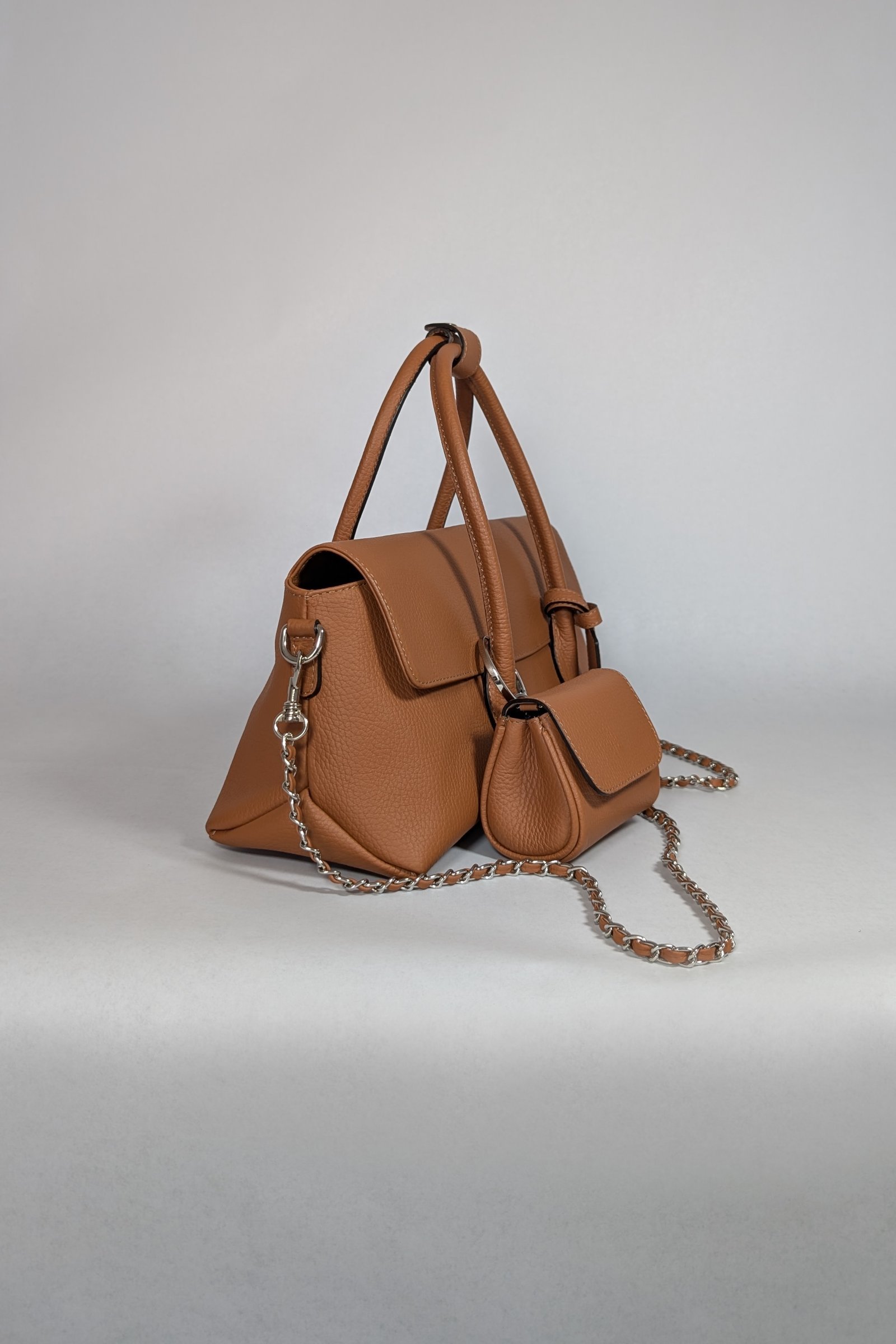
Structured handbag, there is a difference you feel before you understand it. Two bags side by side, similar silhouette, comparable price. One feels right. The other feels hollow. This guide exists to name that difference — precisely, honestly, and without unnecessary jargon.
What a Structured Handbag Actually Means
A structured bag is a bag that holds its shape independently. Set on a table, it does not collapse. Carried empty, it maintains its line. Loaded, it keeps its proportions.
This definition sounds simple. It is not.
The majority of bags marketed as “structured” maintain their shape through internal reinforcement — plastic, compressed cardboard, resin. Remove those supports, and the bag collapses. That is not structure. That is the simulation of structure.
A genuinely structured bag holds its shape because the leather itself is dense and worked enough to do so. No invisible crutches. No compromise on material. The architectural silhouette comes from inside the material, not from a hidden frame.
Discover The women’s luxury full-grain leather – Sovereign – the reference bag
This fundamental difference is what separates high-end leather craftsmanship from everything else.
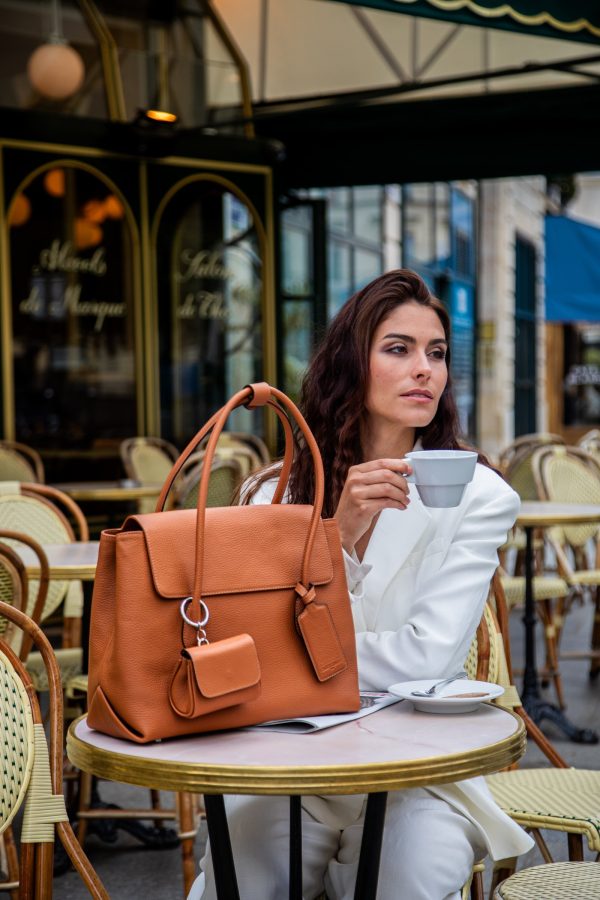
The 5 Criteria That Never Lie :
Criterion 1 — Leather Density
The first criterion is invisible to the eye but immediately perceptible to the touch.
High-density leather resists slight finger pressure. It returns to shape instantly. It does not buckle. It does not mark easily. Held to the light, it presents a tight, consistent grain with no surface irregularities.
This level of density is only accessible in the upper grades of full-grain leather — hides whose natural surface has not been corrected, sanded, or coated to conceal imperfections. These grades represent a marginal share of global production.
A craftsman working on a structured handbag at this level of material knows it and says so. If a brand does not specify the grade of its leather, there is a reason.
Criterion 2 — Stitch Tension
Look at the stitching on a quality bag. Not its visual regularity — its tension.
A well-tensioned stitch holds two pieces of leather in a precise relationship to each other. Not too tight — which would pucker the leather and create stress points that fail over time. Not too loose — which would allow the seam to shift and the structure to drift.
Calibrated stitch tension is set by hand, verified at each pass, and adjusted according to the thickness and density of the leather being worked. It cannot be replicated at industrial speed without loss of precision.
Run your finger along the seam of a bag you are considering. If the leather lies flat on both sides, the tension is right. If it rises slightly at the stitch line, the tension was too aggressive. On a structured handbag if the thread moves when pressed, it was not tight enough.
Discover The women’s luxury full-grain leather – Chancellor – when you need more room
This is a thirty-second test that most people never perform. It separates the bags that will hold for a decade from the ones that will not.
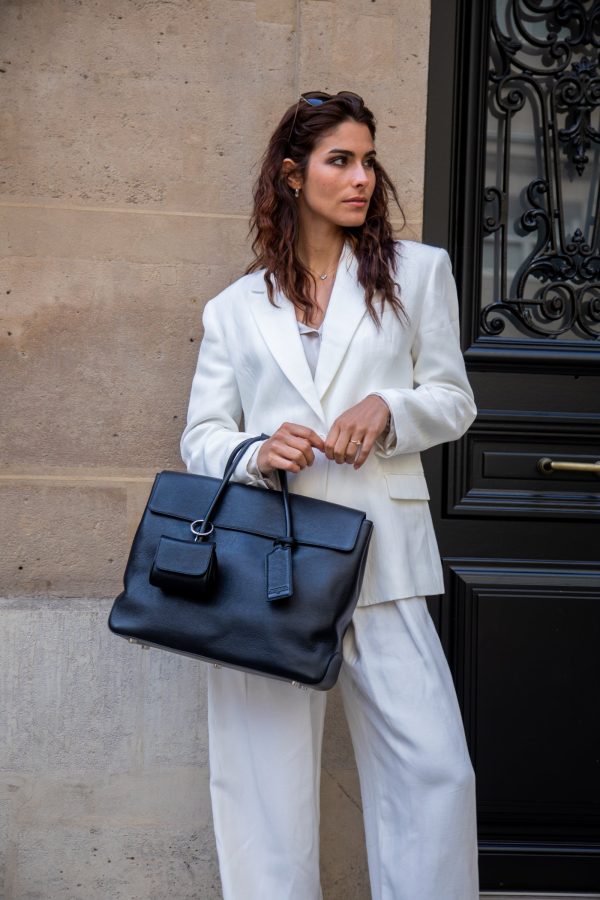
Criterion 3 — Edge Finishing
Every cut edge of leather is a potential point of failure. Left unfinished, it will fray, absorb moisture, and begin to separate. How a maker chooses to address this tells you everything about their standards.
Machine-finished edges are sealed quickly with a roller applicator. The result is uniform and fast. It is also superficial — a thin layer of coating that chips and peels within two to three years of regular use.
Hand-painted edges are applied in multiple layers, with drying time between each application and light polishing between passes. The result is a sealed surface that bonds with the leather rather than sitting on top of it. It protects the cut material for the life of the bag.
You can see the difference. A hand-painted edge has a slight depth to it a subtle three-dimensionality that a machine-finished edge lacks. And you can feel it. Draw your fingernail lightly across the edge. A quality finish does not give for a structured handbag.
Criterion 4 — Interior Lining
The interior of a bag is where many makers cut costs invisibly.
Fabric lining is the most common choice at mid-range price points. It is light, easy to work with, and significantly cheaper than leather. It is also the first element of a bag to show wear — staining, fraying at the seams, sagging after repeated loading.
Split leather lining is a step up in appearance but not in quality. Split leather is the lower layer of the hide, separated from the grain during processing. It lacks the structural integrity of full-grain leather and degrades at a similar rate to fabric under heavy use.
Full-grain leather lining — the same standard applied inside as outside — is the mark of a maker who does not distinguish between what you see and what you touch. It ages well. It cleans easily. And it tells you that no part of the bag was built to a different standard than any other.
Criterion 5 — Shape Retention Over Time
The final criterion cannot be verified at the point of purchase. It is the test of everything that came before.
A high-quality structured bag should maintain its architectural line after five years of regular use. Not perfectly — leather is a living material and will develop character over time. But the fundamental silhouette, the proportions, the way it sits — these should remain consistent.
Discover The women’s luxury full-grain leather – Westmore – the compact version
This longevity is the product of the four criteria above working together. Dense leather. Calibrated stitching. Hand-finished edges. Quality lining. Each one contributes to a structured handbag that does not simply look good on the day you buy it, but continues to justify its price across the years that follow.
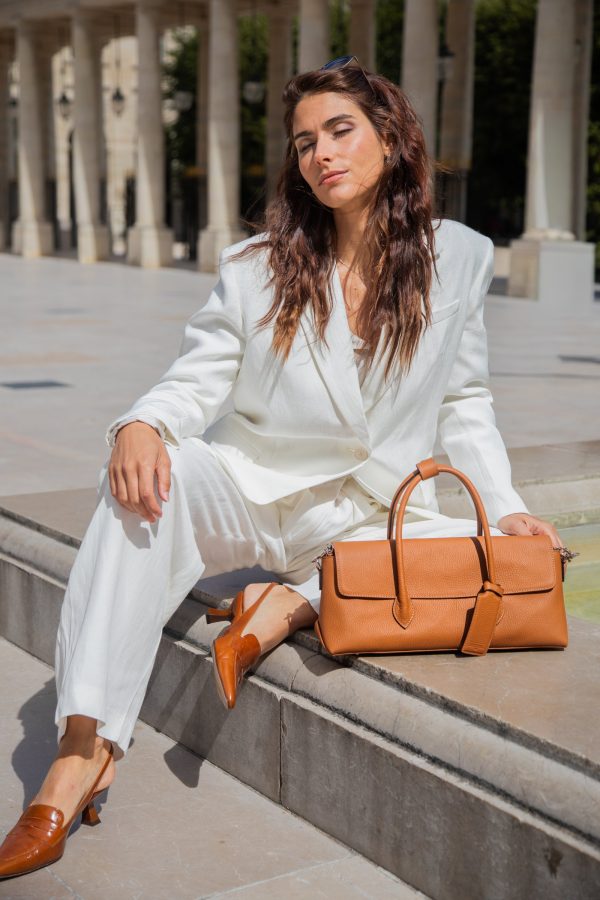
What Defines a High-Quality Structured Handbag? What These Five Criteria Add Up To
A genuinely structured luxury handbag is not defined by its price tag or the name on the label. It is defined by the decisions made at every stage of its construction — decisions that are visible, testable, and permanent.
The next time you are considering a bag at this level, run the five tests. Touch the leather. Examine the stitching. Check the edges. Look inside. And then ask yourself whether this object was built to last, or built to look like it was.
The answer will be obvious. It always is.
Discover the EVIDENCE collection — six models in uncorrected full-grain Italian calfskin, individually numbered.
Looking for the complete picture? This article is part of our guide to exceptional leather goods — covering materials, construction, style, and how to choose well. Read the full guide →
